Growing plants from seeds
What is a seed?
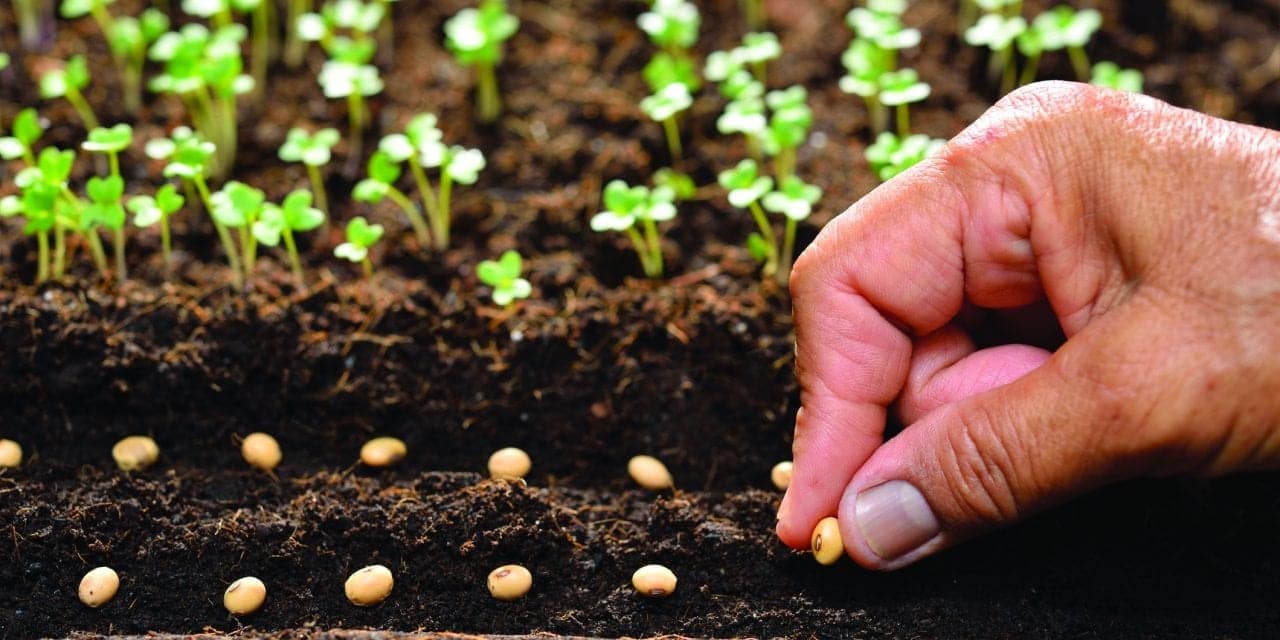
A seed contains a young plant that is resting inside a protective coating until the conditions are right for it to grow into a plant.
What do seeds need to grow?
Like all living things, plants need food, water, and air to grow. When seeds begin to grow, or germinate, they develop roots to help them develop into plants.
- Food – A plant makes its own food through a process called photosynthesis. In photosynthesis, a plant uses the energy from sunlight to change carbon dioxide (from the air) and water (from the soil) into sugars called glucose. Glucose is a sugar that plants use for energy.
- Water – A plant’s roots take water from the soil and use it to transport food to all parts of the plant. Plants are made of up to 95% water; when it doesn’t have enough water it becomes weak and wilts.
- Air – All living things need carbon; air provides a source of carbon dioxide for plants.
A number of plants, particularly vegetables, annuals, and herbs, can be grown from seed. There are several advantages to propagating plants from seed. Seeds are relatively inexpensive, allowing the home gardener to get many plants for the price of a few transplants. Additionally, selection of transplants or plant materials available for sale can be limited to just a few varieties. Growing plants from seed allows the gardener many choices for the home garden.
As more people turn to gardening as a hobby or to grow their own food, they’ve also discovered the rewards of growing plants from seed. It’s easy to become addicted to watching life sprout from a tiny seed that you’ve nurtured yourself. Starting seeds indoors allows you to get a head start on the growing season and to get your hands dirty, even if there’s still snow on the ground.
As more people turn to gardening as a hobby or to grow their own food, they’ve also discovered the rewards of growing plants from seed. It’s easy to become addicted to watching life sprout from a tiny seed that you’ve nurtured yourself. Starting seeds indoors allows you to get a head start on the growing season and to get your hands dirty, even if there’s still snow on the ground.
Seeds are like magic to gardeners and one of the miracles of nature. Plant them in soil, keep them moist and you’re on the way to a beautiful bloom or bountiful harvest. Or, you can start seeds indoors to jump-start your garden with new or unusual varieties.
It’s not as hard as you think and growing plants from seed to maturity is one of gardening’s most rewarding experiences. And there are some other good reasons as well:
Better selection. Garden centers and nursery catalogs offer a much greater variety of plants as seeds as opposed to transplants. You’ll be able to choose from a broader selection of herbs, vegetables and flowers. And, you’ll find flavors and colors you might not even thought about.
It’s simple. Germinating seeds is a snap – they’re whole job in life is to sprout. Young seedlings need some extra care but it not all that difficult.
Seeds satisfy the gardening itch. Sowing seeds can ease spring fever, especially if snow is still swirling outside.
Reap earlier harvests. If you try some season-extending tricks, you’ll be able to plant seedlings in the ground sooner, before local nurseries might carry transplants. Earlier planting also means earlier harvest or bloom.
Whatever the reason, starting plants from seeds is probably not a hard as you think. And growing plants all the way from seed to maturity is one of gardening’s most rewarding endeavors.
Getting started with seeds
- Choose a container
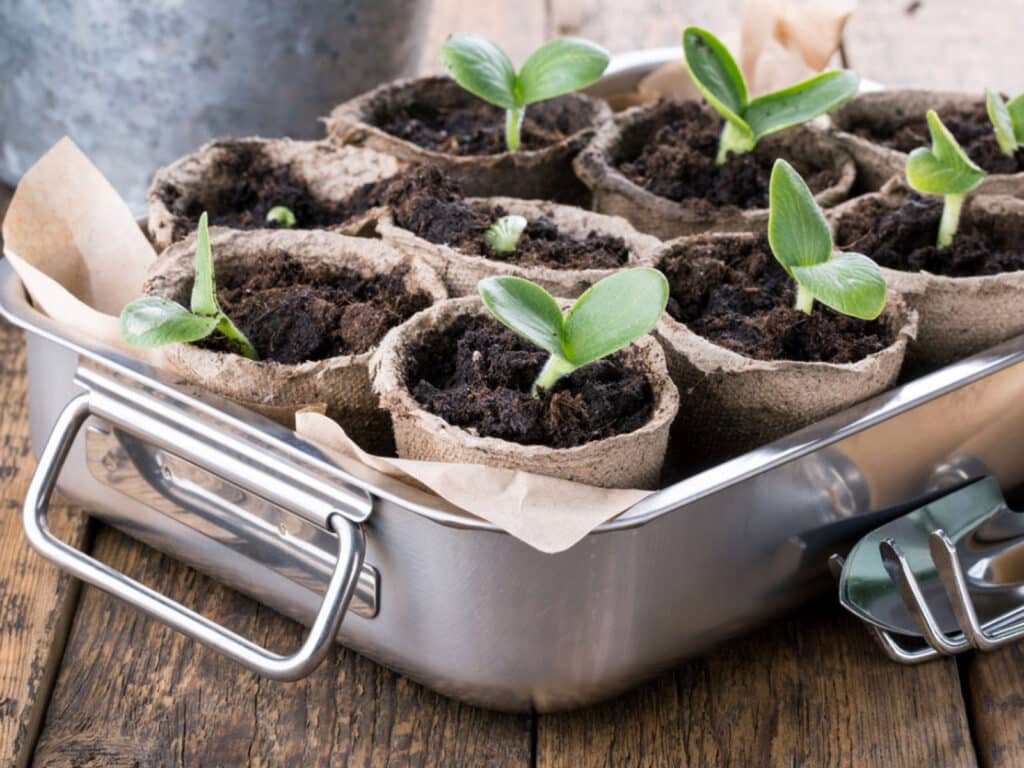
Seed-starting containers should be clean, measure at least 2-3 inches deep and have drainage holes. They can be plastic pots, cell packs, peat pots, plastic flats, yogurt cups, even eggshells. As long as they are clean (soak in a 9 parts water to one part household bleach for 10 minutes), the options are endless. You can also buy seed-starting kits, but don’t invest a lot of money until you’re sure you’ll be starting seeds every year.
- Buy seeds
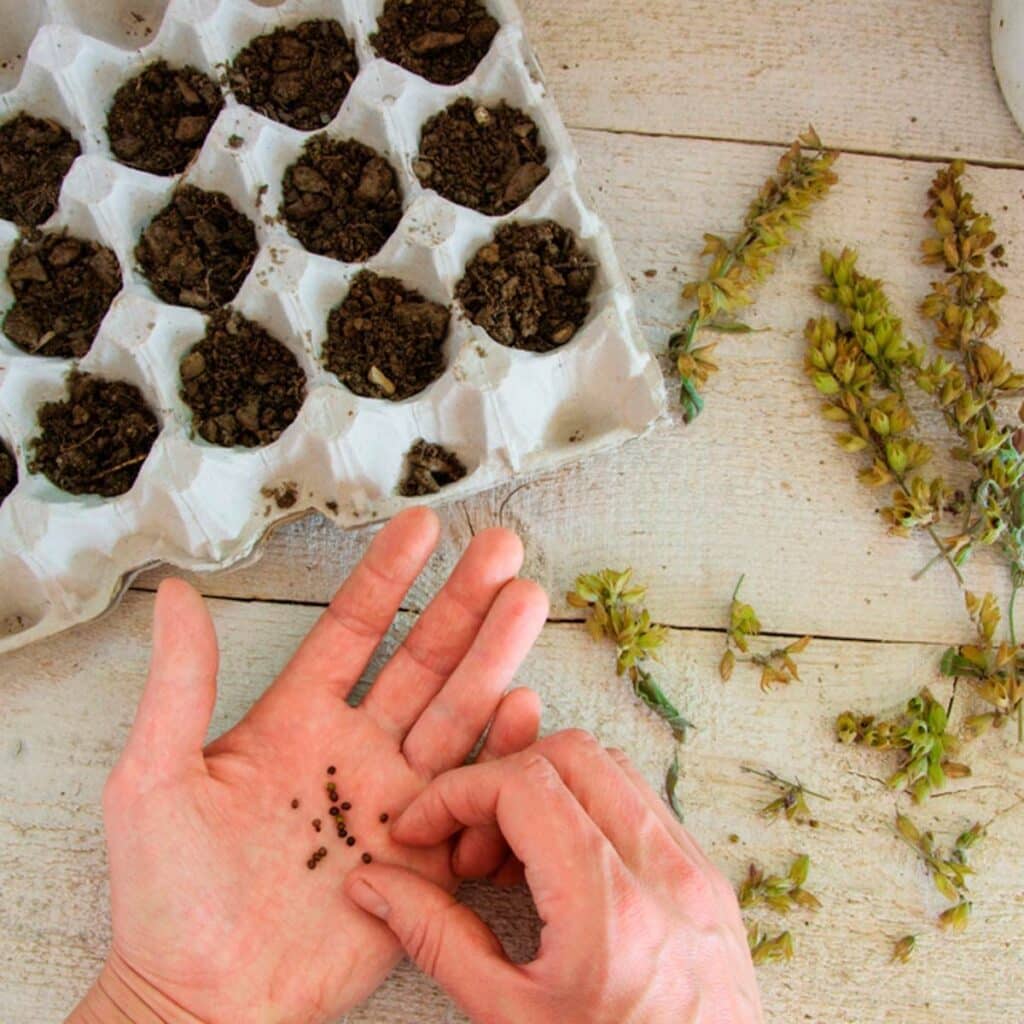
There are thousands of seed varieties to grow. Browse nurseries, catalogs and online seed sources. www.edenbrothers.com Some companies may specialize in seeds that perform well in your region.
EDEN BROTHERS is an online company that offers one of the largest seed and flower bulb assortments available in the United States.
Start with good quality seed from a reliable dealer. Quality seed is true to cultivar/variety name, and does not contain contaminants, such as weed seed, insect casings, soil particles, or plant pulp. Make the best plant selection for the existing growing conditions by researching the many varieties available. Seed can be purchased for a wide variety of plants and characteristics, such as color, size, and growth habit. Many varieties will even be resistant to certain diseases
Commercial seed packages include a lot of helpful information. Look for the year the seeds were packed, usually printed or stamped on the envelope (will appear as “sell by” or “grown for”). Look for seeds packed for the current season. Additionally, the packet typically indicates how far apart to space seeds within a row, the depth for sowing the seeds, days to germination, and instructions for thinning seedlings. Seed packages can be retained as part of garden records for future reference.
- Follow instructions
Plants have different growing needs, so research each variety before you plant. Seed packets are a good source of basic information, such as when to sow, seed depth, days to germination, fertilizing requirements, and transplanting recommendations.
Whenever you are planting from seed, pay careful attention to planting depth. Some seeds need light to germinate; others demand complete darkness and a very specific planting depth. Carefully follow the instructions you’ll find on seed packets. Germination usually requires warm soil: 65-75°F. Start seeds in a warm spot, such as in a sunny window or use a specialized heating mat.
Plan to pamper your seedlings. They require special care to develop them into healthy transplant that are ready to go outside. They are very finicky about watering – you can’t miss a day or they’ll die. Overwatering will result in similar results. If you plan to travel, find someone to water for you while you are gone or wait until you get back before planting.
Seedlings demand strong light (stronger than most windows provide in the northern two-thirds of the country), and can easily succumb to disease without proper watering and good air circulation.
- Give seedlings enough light
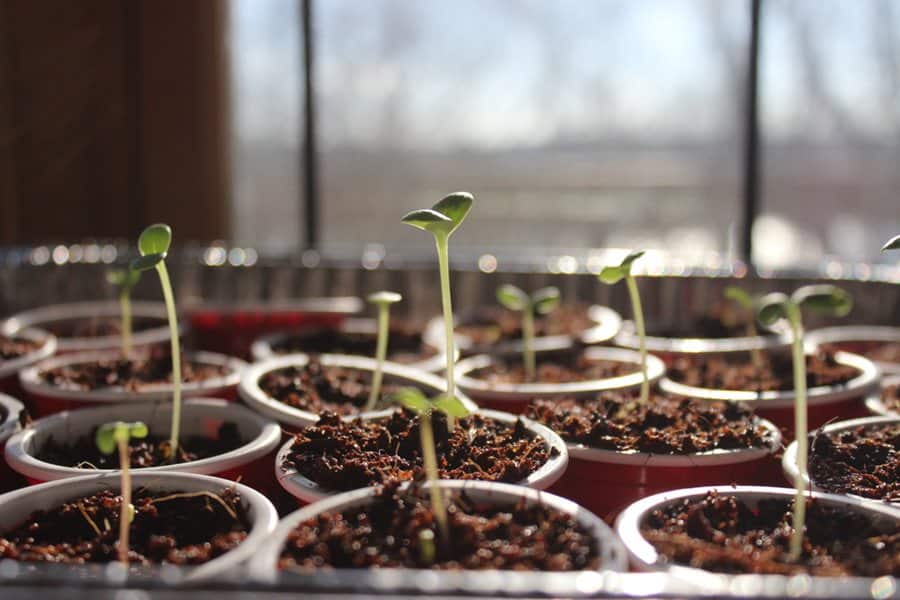
Not enough light leads to leggy, tall seedlings that will struggle once transplanted outdoors. In mild winter areas, you can grow stocky seedlings in a bright south-facing window. Farther north, even a south-facing window may not provide enough light, especially in the middle of winter. Ideally, seedlings need 14-16 hours of direct light per day for healthiest growth. If seedlings begin bending toward the window, that’s a sure sign they are not getting enough light. Simply turning the pots won’t be enough – you may need to supply artificial lighting. Nurseries and mail order seed catalogs can provide lighting kits. Follow instructions carefully.
- Circulate the air
Circulating air helps prevents disease and encourages the development of strong stems. Run a gentle fan near seedlings to create air movement. Keep the fan a distance away from the seedlings to avoid blasting them directly.
Acclimate seedlings to direct sunlight
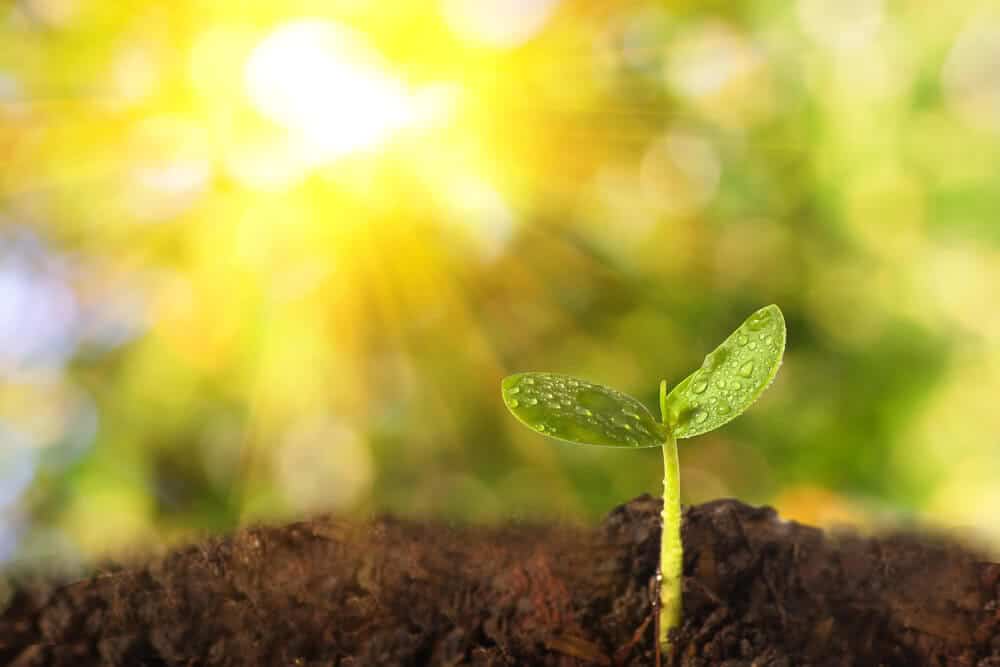
Before seedlings can be planted outdoors, they need to be hardened off, or acclimated to direct sunlight and fluctuating temperatures. It is best to do this over a three-day period by placing them in direct sunlight during the morning only of the first day, then increasing their time outside by a few hours each day until they are vigorous enough to be transplanted.
There’s nothing more awesome than growing a garden in your backyard. You can choose to plant a variety of fauna that are suitable to be grown in your home. You can get yourself a nice bunch of indoor or outdoor plants to give a fresh look to your home from our store. You can also buy plant seeds, live plants online. Choose from organic or inorganic types and also the type of plant you wish to grow such as fruits, vegetables, grass, herbs, etc.

Eden Brothers’ selection is staggering, with over 600 varieties to explore. Find your zone, choose your top features, and get to growing!
Visit official website EDEN BROTHERS www.edenbrothers.com