More location with 5G coverage in UK

5G promises faster data than ever – find out when and where you’ll be able to use it in the UK, and how fast it really is.
All began in 2019
5G launches began in the second half of 2019. The four major mobile networks (EE, O2, Three and Vodafone) and Sky Mobile have all now launched and have further plans for 5G.
Upgrade your phone to use 5G?
You will need a 5G-enabled phone to connect to 5G and so far only a limited number of new or upcoming handsets are offering support. Check carefully before you buy if you want to future-proof for the new standard.
The majority of the main Android mobile phone brands have now announced 5G handsets, and Apple followed suit with the release of the iPhone 12 range. Initially, 5G was only reserved for the most expensive, premium handsets in the range, but it has now started to appear on far cheaper devices. If you’re shopping around for a 5G phone, bear in mind you’ll need a 5G-enabled data connection as part of your bundle, which can be more expensive, especially if you end up using more data.
Browse our iPhone review to see how Apple upgrade the 5G connectivity in their devices.

How fast is 5G?
If we look at how much faster could 5G be than 4G, 5G is capable of reaching maximum theoretical speeds of 10Gbp/s, which would download an HD (750MB) movie in less than a second and a 4K Movie (100GB) in less than 90 seconds. When you compare these speeds with 4G is when you get a sense of just how fast 5G is. 4G, which has a maximum speed of 100Mbps would download an HD movie in one minute and take more than two hours to download a 4K movie – making 5G possibly 100x times faster than 4G.
4G – 60 seconds to download a HD film 5G – 0.6 seconds to download a HD film.
However, It should be noted these speeds are based on theory and optimum conditions. The latest analysis of 4G speeds by Opensignal shows that the highest average 4G speeds would download an HD Movie in a little more than three minutes, quite a lot slower than the maximum would suggest. 5G speeds should also be slowed down by real-world constraints, similar to how 4G is, and real-world speeds are likely to be much lower than the maximums. Consumers should, however, see vastly better speeds than they are currently used to with 4G.
Although, it is hard to fully understand how reliable 5G signals will be, it is understood that 5G will have much greater capacity, and be able to handle a lot more people accessing the internet, which would mean that dropped calls and internet connections should become much rarer.
Can 5G replace my home broadband?
With 5G seemingly capable of far higher speeds than fixed home broadband and much lower latency (which measures the amount of time it takes for a data request like clicking a link to be registered on the network), frustrated homes with subpar broadband speeds can perhaps see 5G as the answer to all their bad connectivity issues. Any potential for 5G to replace home broadband will depend on excellent coverage and signal and the ability to get the signal, probably through wires, into peoples’ homes.
What other applications does 5G have?
5G has many other potential uses other than in telecoms:
- Driverless cars – 5G’s increased speed and lower latency will mean driverless cars can communicate with each other much quicker and avoid potentially fatal collisions.
- Internet of Things – with such high capacity, 5G could allow various appliances and machines to talk and interact, allowing for futuristic ‘smart cities’ where vehicles, traffic infrastructure, home appliance can all talk to each other in real time.
- Virtual Reality (VR) and Augmented Reality (AR) experiences – 5G could also allow for much more immersive VR and AR experiences, offering the potential for products which are currently quite hard to imagine, such as contact lenses that respond to what you are looking at (for example, telling you the weather when you look at the sky).
Is 5G dangerous?
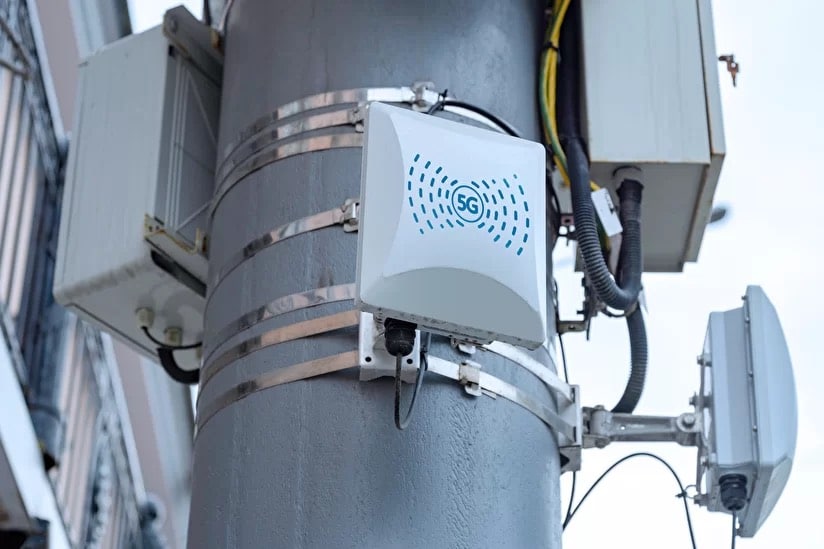
Despite also there being suggestions that 5G carries physical risks, there has yet to be any serious evidence that 5G is indeed dangerous, despite what your conspiracy blogs might say. Studies from organisations including the World Health Organisation (WHO), Public Health England and the UK Health Protection Agency have all shown that 5G isn’t harmful to health.
5G plans
EE’s 5G plans
EE launched its 5G service in 2019 in six cities: London, Cardiff, Edinburgh, Belfast, Birmingham and Manchester. As of June 2020, they have 5G in 80 cities and towns including Bristol, Coventry, Glasgow, Leeds, Leicester, Liverpool, Newcastle, Nottingham and Sheffield. The UK’s biggest mobile network has said that it expects 5G customers to experience an increase in speeds of around 100-150Mbps, even in the busiest areas.
But in may 2022 EE has just hit a major milestone, as the network has announced that it now has over 50% UK population coverage with 5G. That’s a big figure, and a big deal for multiple reasons.
For one thing, the network claims that’s more 5G coverage than any other UK network currently offers. We’re not sure where EE got its figures from, but we’ll take its word for that – it certainly sounds like that would be more than any other UK network currently has.
Beyond that, this milestone has also been hit a year earlier than EE’s target, and five years ahead of the government’s goals, so EE really is racing ahead.
EE hasn’t said how many towns and cities now have 5G, but at our last count it was up to at least 188.
EE divides its pay monthly plans into three plan types: Essential, Smart and Full Works for iPhone. All the deals are 5G ready but as 5G is still not rolled out across the country you may find that your signal dips to 4G fairly frequently.
There is currently a choice of four Essential plans, with two 4G plans on 12-month contract and two 5G plans on a 24-month contract. If you have 5G in your area, it is well worth going for a 5G plan. Choose between data allowances of 160GB or 200GB, both costing around £20 per month. In comparison, the 4G plans offer just 1GB or 3GB of data and only cost fractionally less than the 5G plans. More about EE plans you can find here www.ee.co.uk
Vodafone’s 5G plans
Vodafone switched on its 5G service in July 2019. Seven cities were involved in the initial rollout of 5G including London, Glasgow and Manchester and currently, its 5G service is live in 44 locations including Birmingham, Bristol, Cardiff, Gatwick, Lancaster, Liverpool, Plymouth, Stoke-on-Trent and Wolverhampton.
O2’s 5G plans
O2 launched its 5G offering in October 2019, and kicked off in a range of locations including Aberdeen, Belfast, Brighton, Cardiff, Edinburgh, Liverpool, London, Slough and Leeds. It has since announced expansion of 5G into 60 UK towns and cities.
O2 splits its pay-monthly ‘Refresh’ packages so you’ll actually be signed up for two deals – one for your minutes, texts and data (the airtime plan) and one for the cost of your phone handset (the phone plan). Once you’ve paid for a handset (at the end of your contract), your bill is automatically reduced. In contrast, most other providers will keep you on a higher tariff until you tell them to switch, even when you’ve paid off your phone – a practice we don’t think is fair. Refresh also lets you easily upgrade to another phone by simply paying off the balance owed on your existing handset. O2 is also known for offering perks, including O2 Priority. This gives customers access to a range of offers, including pre-sale tickets. There is also the O2 Rewards scheme for PAYG customers, which gives you back up to 10% of your quarterly spend on credit.
Sky Mobile’s Plans
Sky became the first virtual network to announce 5G services in November 2019, one month after its network partner, O2. Sky will offer all its current perks on its 5G tariffs, such as the unlimited streaming of movies and TV through Sky’s app without using up data, and the rolling over of unused data.
Sky Mobile uses the O2 network. Sky Mobile is a virtual provider, which means it uses another providers’ infrastructure – in this case O2’s. It offers 3G, 4G and 5G coverage.
Sky Mobile offers various data allowances starting at £6 for 2GB. Alternatively, customers can pay for calls and texts on a pay-as-you-go basis, so its plans are more cost-effective for customers when bundled with Sky’s TV service. Sky also sells bundled phone contracts, which allow you to swap your phone any time after 31 days. Sky Mobile customers also get unlimited streaming on Sky apps and data rollover with any Sim-only or contract deal.